
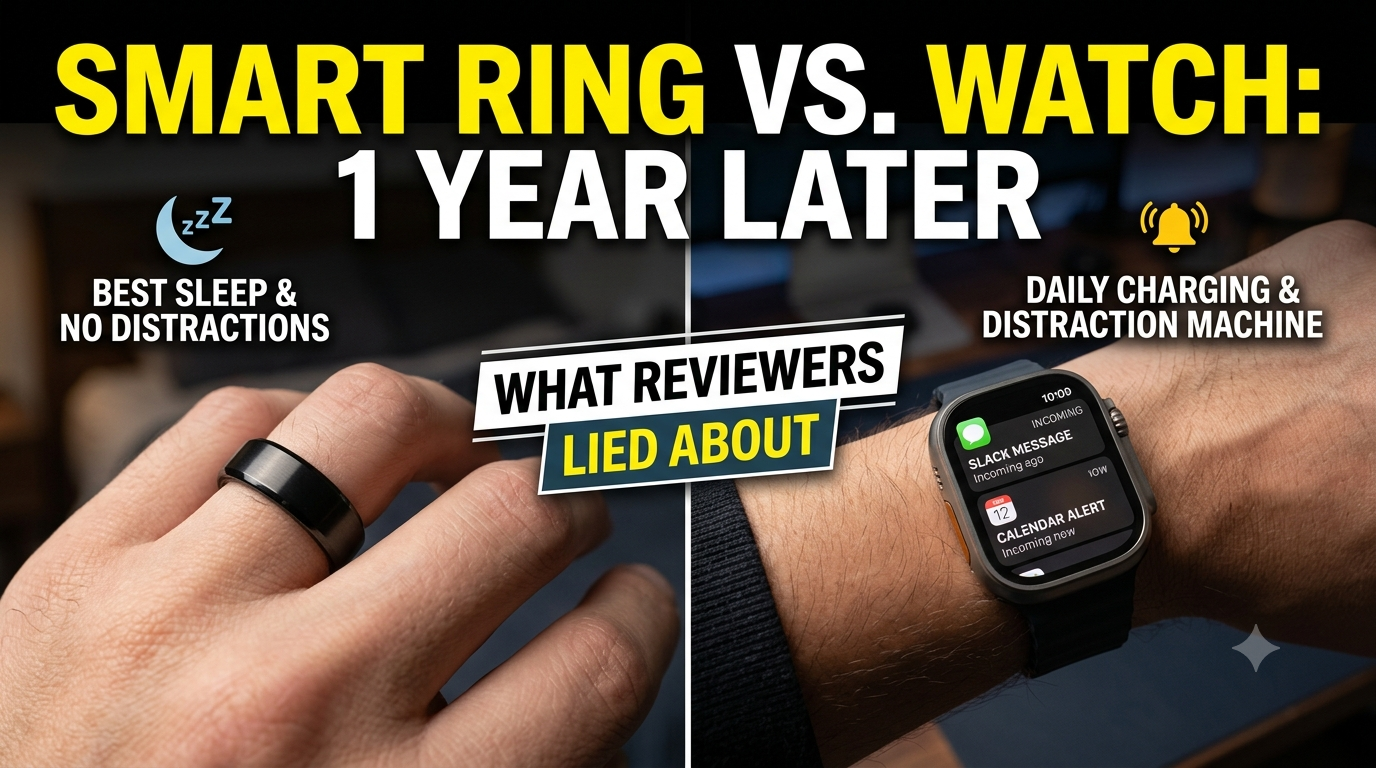
I put a flagship smartwatch on my left wrist and slipped a smart ring onto my finger on the exact same morning last year. People kept asking me which one is "better" like they do the same job. They don't.Most tech reviewers on YouTube lied about this comparison because they only tested the ring for two weeks before shooting a sponsored video. After a full year of wearing both simultaneously, the real-world trade-offs are completely different from what spec- sheets suggest.
The Wrist Screen Gets Annoying Fast
Smartwatches are built to steal your focus.You buy a watch thinking it's just a health tracker. Three days later, it turns into a wrist-mounted notification machine. Slack messages at 10 PM. Group chat pings while driving. Calendar alerts right when you're trying to relax.You look down at your wrist to check resting heart rate and end up reading a frustrating email from your boss. Heart rate spikes immediately. The watch records the exact stress jump it just caused. It's ridiculous.Rings don't have screens. No vibration motor buzzing against your skin, no distraction loops. It just sits on your finger collecting biometrics in the background, and you check the phone app whenever you actually feel like looking at it. That lack of a screen is easily its best feature.
Finger Sensors Win for Sleep Data
If you care mostly about sleep tracking and recovery metrics, rings beat watches on basic human biology.Sleeping with a chunky metal square strapped to your arm sucks. In summer, your wrist gets sweaty under silicone bands. You roll over in bed, the watch shifts, and the green optical sensor flashes bright light across a dark bedroom because it lost skin contact.Plus, wrist skin is thick. Optical sensors have to push light through skin, fat, and hair to read blood flow underneath.Your fingers are completely different. The arteries running down the sides of your fingers sit right near the surface. Ring sensors sit flush against those arteries with zero light leakage. The sleep and HRV data from a ring is noticeably cleaner. And you forget you're wearing it five minutes after hitting the pillow.
Gym Lifters Will Destroy a Ring in One Week
The second you walk into a gym, a smart ring becomes totally useless.Try doing heavy deadlifts, pull-ups, or kettlebell swings with a metal ring on. The steel knurling on bars grinds against the ring coating and scratches a $300 device to pieces in a single set. Worse than the cosmetic damage, the bar pinches your skin against the hard ring. It hurts like hell.And the workout heart rate data? Terrible. The moment you flex your hand or grip heavy iron, the ring loses solid skin contact. Your heart rate graph shows random drops right when you're pushing max effort.Watches dominate active fitness tracking. You get live heart rate zones on a readable screen, onboard GPS for runs without taking your phone, and zero risk of pinching your finger skin on a barbell.
Battery Routines and Persistent Micro-Annoyances
Battery life on smartwatches drives me crazy.A full-featured smartwatch dies in 24 to 36 hours. That forces you into an annoying daily routine. Charge it overnight? You lose all your sleep tracking data. Wear it to bed? Now you have to find some awkward 45-minute window during your morning work calls to slap it on a magnetic puck.A smart ring has no screen to light up, so it runs five to seven days on a single charge.I throw mine on its little charging dock once a week while taking a shower. That's it. Never think about battery percentages the rest of the week.
The Hidden Monthly Subscription Catch
Check the software pricing fine print before buying anything.Hardware makers realized selling you a ring once doesn't make enough recurring revenue. Certain ring brands charge a mandatory $6 or $7 monthly fee just to let you view your own biometric data in their app. Cancel the subscription, and your expensive titanium ring basically turns into a dumb paperweight that only counts basic steps.Apple, Garmin, and Samsung don't lock your raw health data behind recurring paywalls. You buy the watch once, and your workout logs, sleep metrics, and heart rate history stay yours forever.
Which One Is Actually Worth Buying?
It comes down to what you actually do every day.If you lift weights, run outdoors, or want live workout numbers right on your wrist, buy a smartwatch. A ring will just irritate you at the gym.If your main goal is tracking sleep debt, monitoring stress levels, and seeing recovery scores without getting pinged by work notifications all day, get a ring. It stays out of your way and does its job quietly.